
Recent deck jobs — drag to compare
Deck — Composite Rebuild
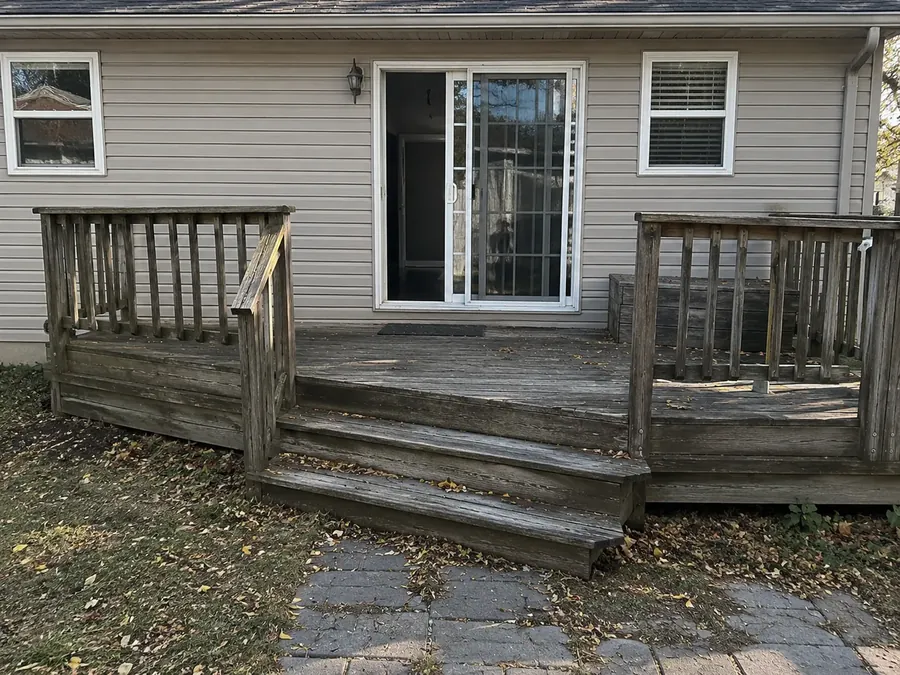
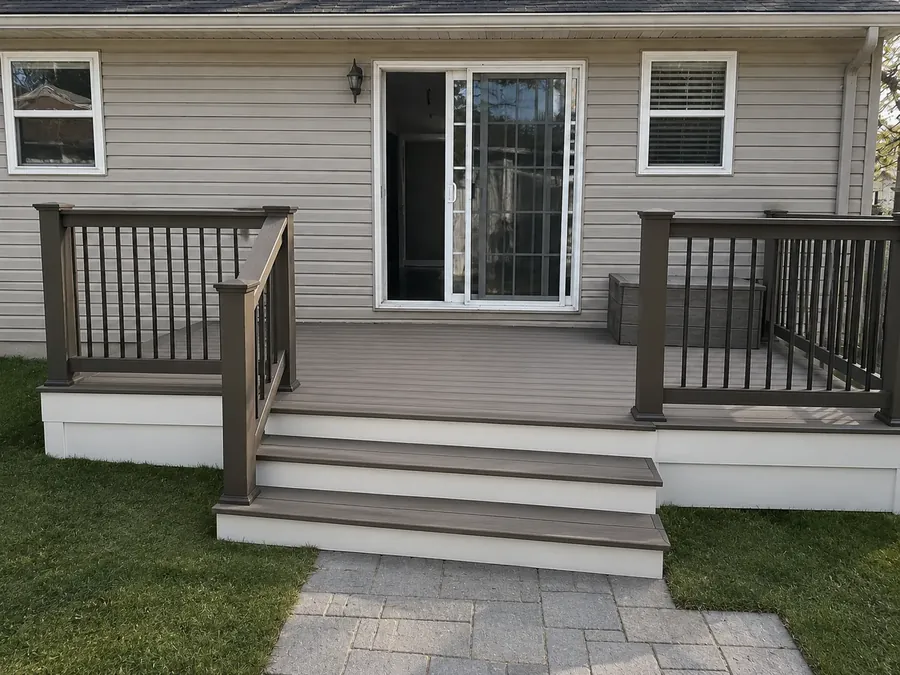 BeforeAfter
Drag the handle — or use the arrow keys — to slide between before and after.
What clients said
"Best contractor experience we've had. Committed to quality — no shortcuts, honest pricing, communication was excellent throughout."
"Efficient and expert. Got the drywall repair done in a day and it looks perfect. Will hire Ed again for future projects."
Deck services we handle
- New deck construction (pressure-treated, cedar, composite)
- Deck repair — board replacement, joist repair, railing
- Deck restoration — sand, stain, seal
- Railing installation (wood, aluminum, cable)
- Stairs and step replacement
- Ledger board flashing (critical for house-attached decks)
- Composite deck installation (Trex, TimberTech)
- Deck painting
What a New England winter does to a deck
A deck here lives through something a deck in a mild climate never sees: water gets into the end grain, freezes, and splits the board from the inside. Snow sits on it for weeks. Ice-melt chews at the fasteners. That is why decks in this area usually fail at the connections and the ledger long before the boards wear out.
So we build for that. Flashing over the ledger, proper hangers rather than toe-nailing, footings below frost line, and end grain sealed. None of it shows in a photo, and all of it is the difference between a deck that lasts twenty years and one that feels spongy in eight.
Composite or pressure-treated wood
Pressure-treated wood costs less up front and can be stained whatever colour you want, but it needs re-sealing every couple of years here or it greys and checks. Composite costs more, never needs staining, and does not splinter — but it gets hot in direct August sun and it shows scratches.
For a deck you will actually use every summer, composite usually wins on the second decade. For a deck that is mostly a way to get from the door to the yard, treated wood is honest value and we will say so.
Footings, frost and the part people skip
Frost depth in Western Massachusetts means footings have to go deep — a deck on shallow blocks will heave, and once it has heaved nothing above it sits right again. This is the single most common fault we find on decks built by somebody's cousin over a weekend.
Rebuilding a heaved deck costs more than building it properly the first time, which is why we do not quote a deck without looking at the ground it will stand on.
FAQ
Do I need a permit?
Yes for new deck construction. We handle the permit pull as part of the job.
Composite vs pressure-treated?
Composite lasts 25-30 years with almost no maintenance but costs 2-3× more upfront. PT is cheaper but needs staining every 2-3 years.
Can you refinish my existing deck?
Yes — sand down, replace bad boards, stain and seal. Usually 3-5 days for a standard deck.
Where we do this work
Deck construction across Western Massachusetts and Northern Connecticut — Longmeadow, East Longmeadow, Ludlow, and 16 more towns. Same crew, same pricing, same schedule in every one of them.
Often booked alongside siding installation and handyman services. Worth reading first: How to choose a contractor: 7 red flags.